Find the friction between discovering your brand and buying
Visitors need to understand your brand as well as its products. A direct-to-consumer UX audit examines how your site builds that understanding and supports a purchase. Give your team a confidential review of the experience, with prioritized recommendations and relevant examples from other brand websites.
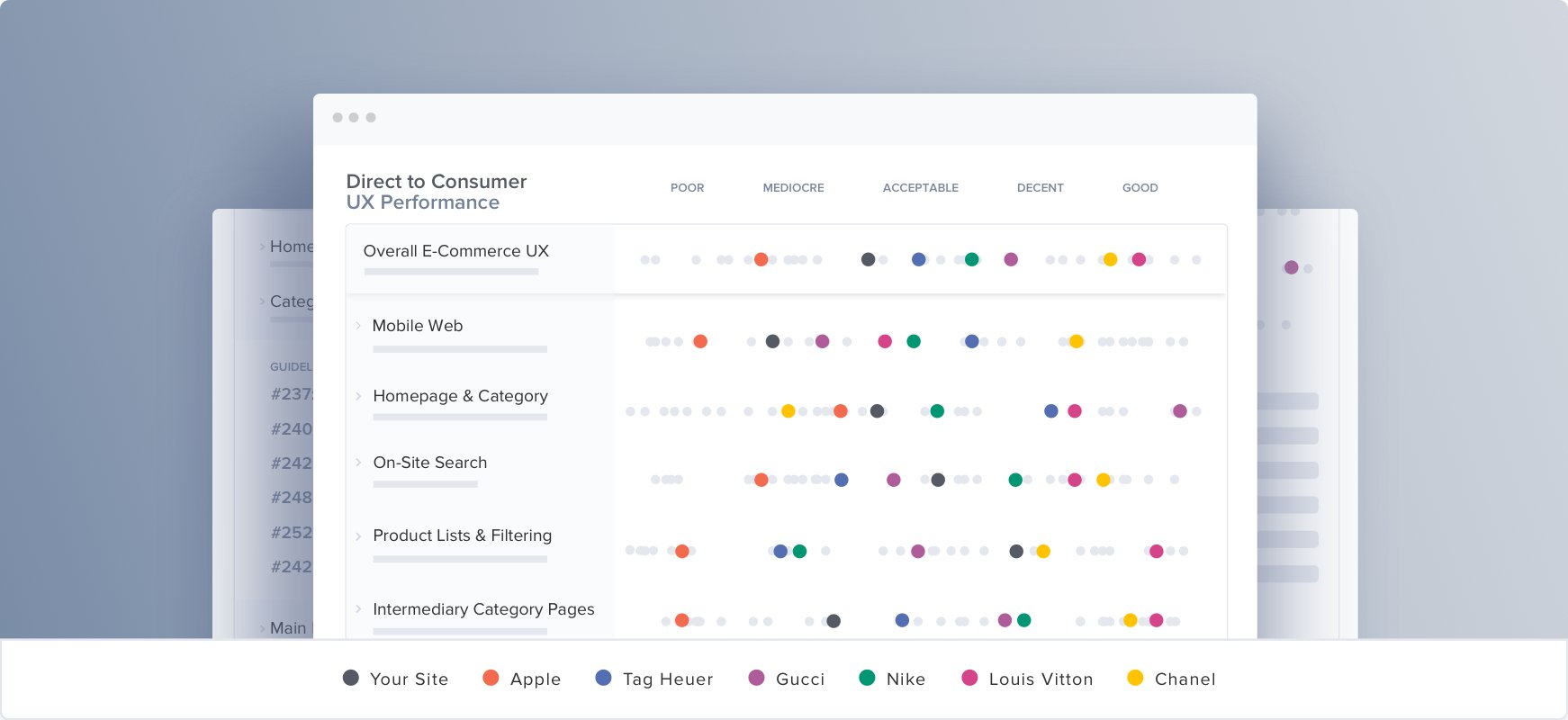


Your Direct-to-Consumer audit at a glance

500+ D2C evaluation parameters
Assess brand information, discovery, product details and ordering across desktop and mobile, using research criteria that account for the experience of buying directly from a brand.

Up to 40 prioritized UX improvements
Receive recommendations shaped around the issues on your D2C site, with proposed changes and examples that help your team assess the next improvements to make.

Audit report & presentation
A 120+ page report explains the identified issues and proposed changes with examples. Review the results in a presentation and follow up through 4 advisory calls.

4 advisory calls
Work with your Baymard auditor across four advisory calls to discuss the findings, review implementation questions, and support your team as it applies the recommendations.

See your D2C experience alongside other brands
Compare your implementation with relevant direct-to-consumer experiences in Baymard’s research, including established and niche brands, to understand how different sites support the same shopping tasks.
What to expect from your Baymard UX Audit
Work directly with a Baymard auditor to agree the scope, review the findings, and plan your next steps. Delivery timing is confirmed during scoping.
Kickoff: Meet your auditor
Discuss your goals, priority journeys, devices, and project requirements with your lead auditor. Agree the review scope and confirm delivery timing before the audit begins.
Audit: Expert analysis
Team presentation: Findings and recommendations
Implementation support: 4 advisory calls
Next steps: Put the findings to work


What your Direct-to-Consumer audit covers
The review considers how your site explains the brand and presents its catalog, then follows the journey through search, product lists, detail pages and checkout. Account features and mobile interactions are included. This gives your team evidence about both the brand context and the practical steps of shopping.
Real results from Baymard-backed UX changes
See how teams turn research into measurable improvements.
$16M
Revenue increase reported by a premium apparel brand after implementing a product comparison recommendation from its Baymard audit.
2x
CVR increase after implementing our checkout usability standards
$1M+
reported value from implementing Baymard-backed UX changes
40%
growth in digital memberships after implementing Baymard insights.
What Our Clients Say
Baymard’s research is used by 29,000+ brands, agencies, researchers, and UX designers, across 80+ countries, and includes 71% of all Fortune 500 ecommerce companies.

“First off, thank you. This was the most engrossed I’ve ever been in a 2-hour meeting. This [audit presentation] was incredibly insightful and very helpful. Many, many thanks.”Yvonne Kim Head of E-Commerce at Ōura Ring

“Intelligent, consumer-focused insights that are clear and actionable. The team in the room really loved the way the Baymard Institute highlighted the optimizations in the various user experience elements (copy, layout, design, calls-to-action…), from the perspective of consumer struggles. Baymard’s Usability research really complements our other existing research tools.”Will Close Director of A/B Testing at Nike.com

“This was indeed very helpful guidance and a very well-documented roadmap for us to fix, validate, organize, collectively understand and continually improve our ecommerce foundation.”Cat Brunson UX Manager at Columbia Sportswear
Direct-to-Consumer UX audit FAQs
What does the Direct-to-Consumer audit cover?
The full-site audit reviews desktop and mobile D2C websites, covering brand information and the shopping journey from discovery to checkout and accounts. Findings and client-specific scorecards remain confidential. Discuss your brand, catalog and target journeys with the team; delivery timing is confirmed during scoping.
When is an audit useful?
Can you compare us with direct competitors?
Can a redesign or prototype be included?
How long does the audit take?
Are the findings confidential?
How does the recommendations guarantee work?
How do we get a quote?
Understand what your D2C experience needs next
Talk through your brand, catalog and shopping journeys with an expert, then agree a review that gives your team clear recommendations and useful examples.